
A boat interior should reflect the way its owner enjoys life on the water. Some vessels are designed for relaxed family outings, while others serve fishing enthusiasts or provide a setting for entertaining guests. Regardless of their purpose, comfortable seating makes a noticeable difference. Choosing appropriate boat seat materials helps create an interior that looks inviting while handling the demands of regular boating. Owners planning an upgrade can explore professional marine upholstery options through Boat Upholstery Fort Lauderdale, a company specializing in upholstery solutions for boats and yachts.
Start With the Purpose of Your Boat
Before choosing upholstery, consider how the vessel is used. A fishing boat has different requirements from a luxury cruiser or a family pontoon.
Fishing vessels often need surfaces that are easy to clean and suitable for frequent exposure to water. Family boats benefit from supportive cushions and practical finishes that remain comfortable during longer outings. Luxury vessels may place greater emphasis on coordinated colors, decorative stitching, and premium textures.
Understanding these differences makes it easier to narrow down suitable boat seat materials. It also prevents owners from choosing a product based only on its appearance.
Explore the Possibilities of Marine Vinyl
Marine vinyl remains a popular upholstery option because it combines practical performance with considerable design flexibility.
Available finishes range from smooth contemporary surfaces to textured patterns that add visual depth. Owners can also choose from numerous colors to coordinate seating with flooring, dashboards, and interior panels.
Quality marine-grade vinyl can provide resistance to UV exposure, moisture, and everyday wear. However, specifications vary between manufacturers, so it is important to select products intended for the conditions in which they will be used.
When comparing boat seat materials, buyers should pay attention to protective properties, surface construction, and recommended maintenance.
Make Comfort a Priority
A seat should feel as good as it looks. Even attractive upholstery cannot compensate for cushions that have lost their original support.
Foam gradually compresses through repeated use. Over time, cushions may become uneven, lose their shape, and feel uncomfortable during longer trips.
A complete seating renovation should therefore examine the internal construction. Foam density, thickness, and shape all influence the finished result.
Combining supportive cushioning with suitable boat seat materials can improve the passenger experience and give older seating a more refreshed appearance.
Use Color to Create a Distinctive Look
Color selection can influence the entire atmosphere of a marine interior. Light shades such as cream, white, and gray create a bright and open feeling. Navy, charcoal, and darker blue provide contrast and help define individual seating areas.
Two-tone combinations offer another opportunity for customization. A neutral central panel with darker side sections can create a refined appearance without overwhelming the space.
The most effective boat seat materials complement the vessel’s existing design rather than competing with it. Coordinating upholstery with surrounding surfaces helps create a consistent interior.
Give Outdoor Seating Extra Attention
Exposed seating faces some of the toughest conditions onboard. Cockpit benches, bow cushions, and helm chairs may receive direct sunlight, rain, and water spray.
These areas require materials suited to frequent environmental exposure. Owners should review UV resistance, moisture protection, and cleaning recommendations before making a selection.
Protective covers can reduce unnecessary exposure when the boat is not in use. Regular inspections also help identify early signs of fading, cracking, or seam damage.
Choosing suitable boat seat materials for each location can help maintain a consistent appearance while accounting for different operating conditions.
Stitching and Finishing Complete the Design
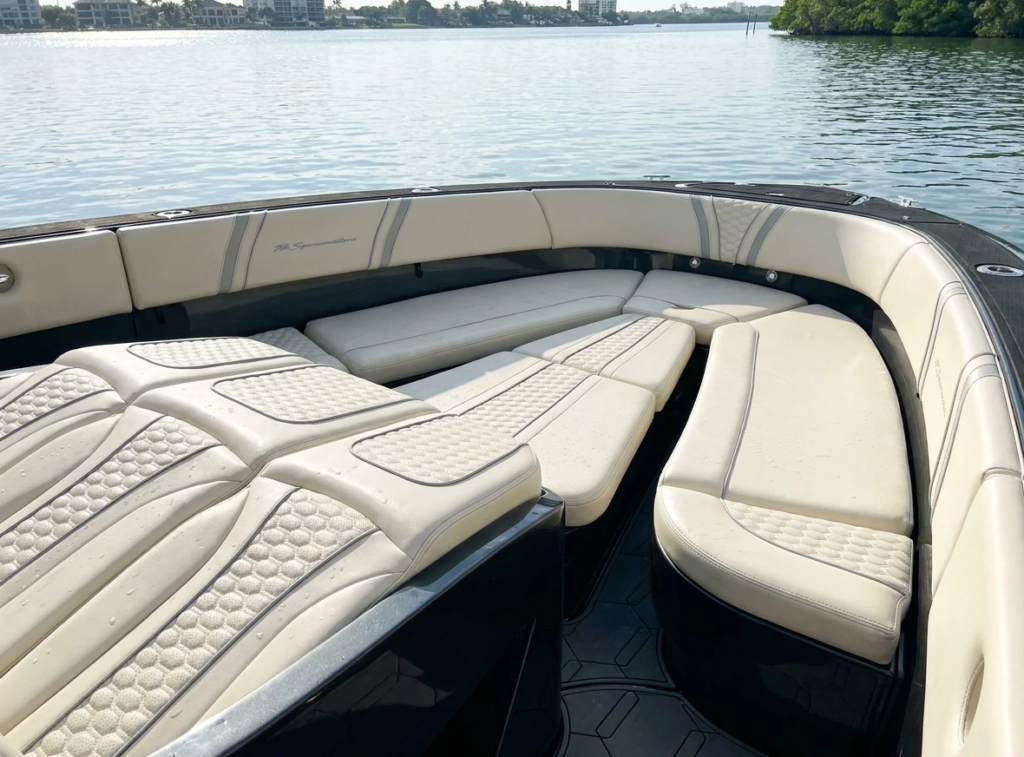
Small details can make custom seating look considerably more refined. Decorative stitching, contrasting thread, piping, and carefully shaped panels all contribute to the finished appearance.
Diamond patterns can introduce a more distinctive style, while simple horizontal stitching often suits minimalist interiors. The choice should reflect the vessel’s character and the owner’s preferences.
However, appearance is only one consideration. Seam construction and appropriate thread also matter because stitching must withstand repeated use and marine exposure.
Combining thoughtful finishing details with durable boat seat materials creates seating that feels more individual and professionally designed.
Keep Maintenance Simple
Marine upholstery needs regular attention, regardless of its quality. Salt, sunscreen, food, and dirt can accumulate during normal boating activities.
A practical care routine helps prevent buildup and preserve the finished surface. Owners should wipe seating regularly, remove salt residue, clean spills promptly, and allow wet cushions to dry completely.
They should also follow manufacturer instructions when choosing cleaning products. Certain finishes may react poorly to harsh chemicals or unsuitable cleaning methods.
Good maintenance helps boat seat materials retain their appearance and can reduce the need for premature repairs.
Know When to Consider Reupholstery
Cracked surfaces, faded colors, loose seams, and compressed cushions can indicate that seating needs attention. However, a complete interior replacement is not always necessary.
In some cases, owners can restore individual cushions, replace damaged foam, or update selected seating sections. This approach can improve the interior without changing the entire layout.
A professional assessment helps identify which components need attention and which can remain in place. It also provides an opportunity to consider new colors, textures, and boat seat materials that better suit the vessel.
Final Thoughts
A well-designed marine interior combines comfort, practical construction, and attractive details. Upholstery plays an important role in bringing these elements together, especially in seating areas used throughout every journey.
Selecting suitable boat seat materials allows owners to personalize their vessels while accounting for sunlight, moisture, regular use, and maintenance requirements. With thoughtful planning and quality workmanship, an upholstery upgrade can make a boat more comfortable and visually appealing for many seasons.