

Professionals working with marine upholstery often note that different boat brands present very specific interior challenges and wear patterns. Owners looking for trusted upholstery guidance can start here, as specialists familiar with Boston Whaler boats emphasize that material selection and installation directly affect comfort, durability, and long-term performance in Florida conditions.
Boston Whaler is widely known for its unsinkable construction and practical layouts. However, like any boat used year-round in sun, salt, and humidity, its interior and seating surfaces experience consistent exposure that eventually requires attention.
Understanding Upholstery Characteristics of Boston Whaler Boats
Boston Whaler boats are designed for versatility, often serving fishing, cruising, and family recreation purposes. As a result, their upholstery must handle frequent use, direct sunlight, and regular contact with water.
Seats, leaning posts, and interior cushions are typically exposed rather than protected inside enclosed cabins. Therefore, upholstery materials must prioritize UV resistance, moisture control, and structural stability.
Professionals often observe that factory upholstery performs well initially, but Florida conditions accelerate surface fatigue, especially on lighter-colored vinyls and high-contact seating areas.
Common Upholstery Wear Areas on Boston Whaler Models
Certain upholstery components tend to show wear earlier than others due to design and usage patterns.
Helm seats and leaning posts experience constant movement and pressure, leading to surface cracking or seam stress over time. Bow seating and aft cushions are often exposed to direct sunlight for extended periods, increasing the risk of fading and stiffness.
Interior wall padding and under-gunnel upholstery may also trap moisture if materials or backing systems are not properly ventilated. As a result, early signs of discoloration or mildew can appear even when routine cleaning is performed.
When Upholstery Replacement or Upgrades Make Sense
Rather than waiting for visible damage, professionals often recommend proactive upholstery updates for Boston Whaler owners who boat frequently.
Replacing worn seating before foam breakdown occurs helps preserve comfort and prevents structural issues beneath the surface. Additionally, upgrading materials during refits allows owners to address known weaknesses in factory upholstery configurations.
In many cases, partial upholstery updates provide the best balance between cost and performance. Targeting high-use areas such as helm seating and cockpit cushions often delivers noticeable improvements without full interior replacement.
Material Recommendations for Florida Conditions
Material selection is one of the most important decisions when updating upholstery on a Boston Whaler.
Marine-grade vinyl remains a popular choice due to its durability and ease of maintenance. However, not all vinyl performs equally under intense UV exposure. Professionals typically recommend advanced UV-stabilized vinyls with reinforced backing for Florida use.
Foam selection is equally important. Closed-cell or quick-dry foams reduce moisture retention and help prevent odor or mold issues. Stitching materials and thread quality should also be considered, as seams are often the first point of failure in high-sun environments.
Color choice plays a role as well. Lighter tones reduce heat buildup but may show stains more easily, while darker colors hide wear but absorb more heat. Finding the right balance depends on how the boat is used.
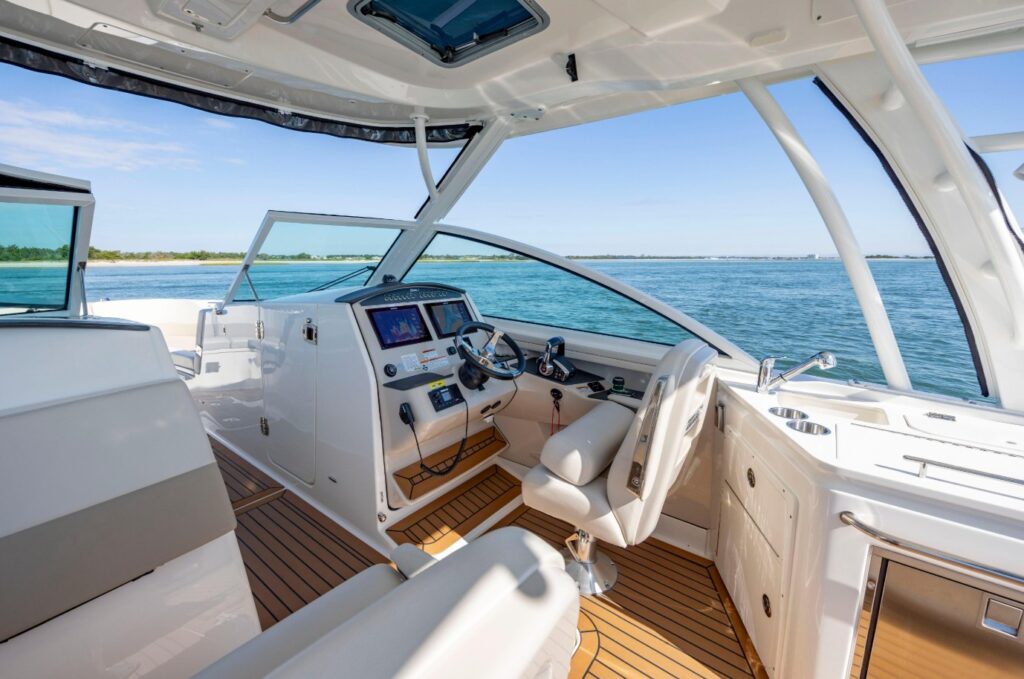
Interior Upholstery and Comfort Considerations
While Boston Whaler boats are often associated with open layouts, interior upholstery still affects comfort and noise control. Upholstered panels, console padding, and interior seat backs can reduce vibration and improve onboard experience.
Professionals emphasize that even small interior upholstery upgrades can make long days on the water more comfortable, especially for families or passengers unfamiliar with marine environments.
Proper installation techniques are essential to prevent sagging, water intrusion, or premature material failure.
Maintenance Practices That Extend Upholstery Life
Routine care significantly extends the lifespan of upholstery on Boston Whaler boats. Regular rinsing after saltwater exposure prevents surface degradation, while scheduled cleaning removes sunscreen residue and airborne contaminants.
Protective treatments designed for marine upholstery can reduce UV damage and help maintain flexibility. Additionally, proper storage or use of covers during downtime minimizes unnecessary exposure.
Early inspection of seams and high-contact areas allows for timely repairs before damage spreads.
Private Use vs Charter and High-Use Scenarios
Upholstery requirements differ depending on how a Boston Whaler is used. Private owners may prioritize comfort and aesthetics, while charter or guide operations require materials that withstand heavy traffic and frequent cleaning.
In high-use scenarios, professionals often recommend simplified designs with reinforced seams and easily replaceable cushion sections. This approach reduces downtime and long-term maintenance costs.
Conclusion
Boston Whaler boats are built for reliability and versatility, but their upholstery must be properly maintained and updated to match Florida boating conditions. From seating and cushions to interior padding, upholstery choices directly affect comfort, appearance, and long-term performance.
By understanding common wear areas, selecting appropriate materials, and following professional installation and maintenance practices, Boston Whaler owners can keep their boats looking and performing at a high level for years to come.